Skip to content
Whitehorse Orthodontics
Treatments

Early Treatment for Children

A first orthodontic check around age seven, and interceptive treatment only when it will genuinely change the outcome. Guiding jaw growth at the right moment can create room for crowded teeth and avoid extractions or surgery later.

Early Treatment for Children at Whitehorse Orthodontics
What it is

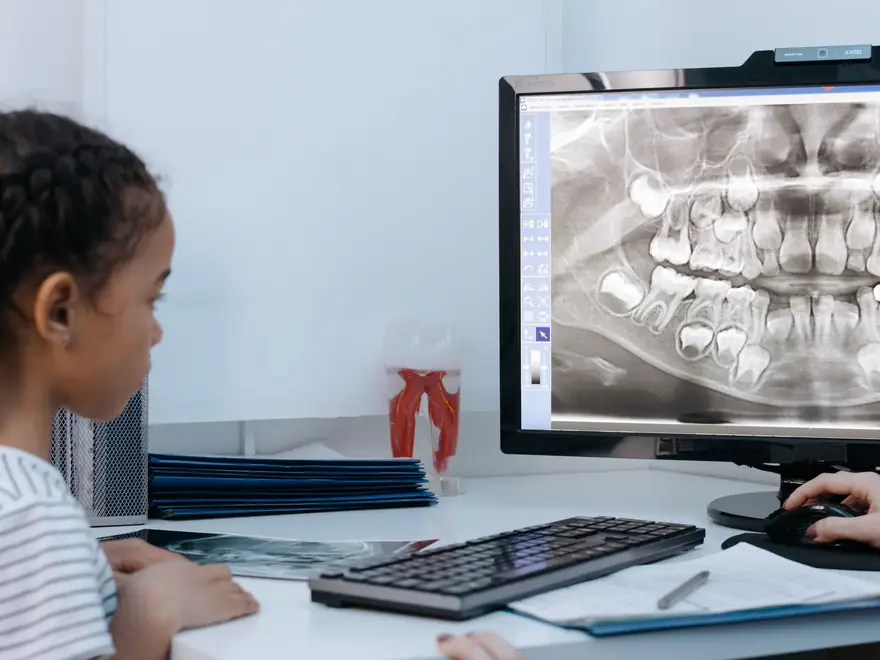
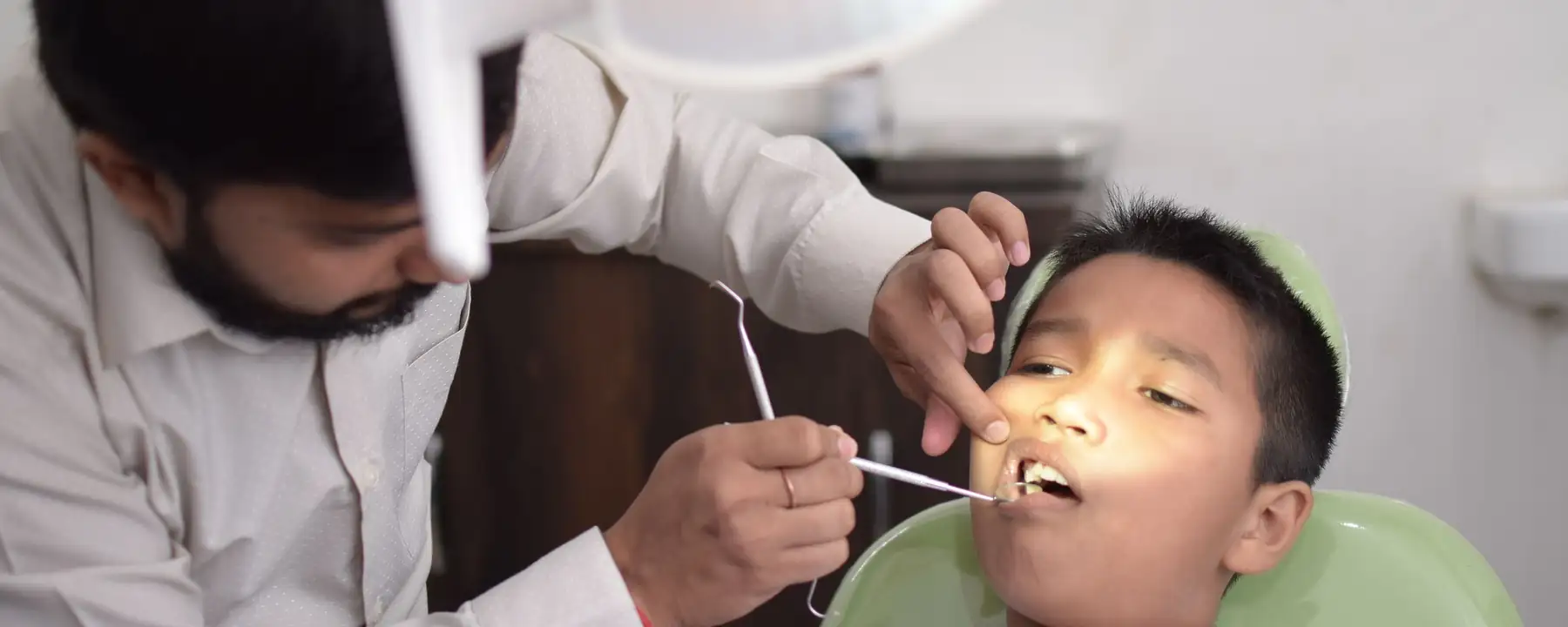
The Canadian and American Associations of Orthodontists both recommend a first orthodontic check at about age seven. By then a child has a mix of baby and adult teeth, and problems that are simple to influence now are visible for the first time.

The check is not a sales appointment. Most seven-year-olds we see need nothing at all beyond a review in a year or two, and we will say so. What the visit buys is timing: knowing which children need something now, and which are better left until all the permanent teeth are through.

For the minority who do need early treatment, the opportunity is real and it closes. While a child is still growing, an expander or a partial course of braces can widen a narrow arch, correct a crossbite, create room for crowded teeth and guide the jaws into a better relationship. Wait until growth is finished and the same corrections may need extractions, or surgery.

Early Treatment for Children at Whitehorse Orthodontics
Why patients choose it

What early treatment for children gives you.

  • Guides growth while it is happening

    Influencing how the jaws develop is only possible during childhood. Afterwards, we can only move teeth within the jaws you have.

  • Creates room for crowded teeth

    Widening a narrow upper arch at the right age often means the permanent teeth have somewhere to erupt into.

  • Can avoid extractions and surgery later

    Early correction of a skeletal discrepancy sometimes removes the need for a much bigger intervention as an adult.

  • Protects teeth that are at risk

    Severely protruding upper front teeth are far more likely to be broken in a fall or a collision. Reducing that is a health decision, not a cosmetic one.

How it works

Step by step, from first visit to finished.

  1. 01

    First visit, around age seven

    A complete examination with radiographs where they are needed, and a clear answer: treat now, review later, or nothing required.

  2. 02

    Monitoring, if that is the right call

    Many children simply come back annually so we can watch the permanent teeth arrive. There is no charge to be watched.

  3. 03

    Phase One, only where it earns its place

    A limited course, commonly an expander, partial braces or a habit appliance, running six to twelve months with a specific goal.

  4. 04

    Rest period

    Appliances come out and we let the remaining permanent teeth erupt naturally, checking in periodically.

  5. 05

    Phase Two, if still needed

    A shorter course of full braces in the teens to finish the alignment and the bite.

Who it suits

Is this the right treatment for you?

  • Any child around age seven, as a screening visit
  • Children with crossbites, severe crowding, or a narrow upper jaw
  • Children whose upper front teeth protrude noticeably
  • Children with a thumb or finger habit affecting the bite
  • Children whose family dentist has recommended an orthodontic opinion
FAQ

About early treatment for children.

Anything we have not covered? Call (867) 668-4406 and ask.

  • Isn't seven too young for braces?

    For braces, usually yes. Seven is the right age for an assessment, not for treatment. The point is to identify the small number of children for whom acting early genuinely changes the outcome.

  • What should I watch for at home?

    Early or very late loss of baby teeth, difficulty chewing or biting, mouth breathing, thumb sucking past about five, crowded or blocked-out teeth, jaws that click, and teeth that meet oddly or not at all.

  • Will my child need braces twice?

    Sometimes. Phase One corrects a specific problem while growth allows; Phase Two aligns the full permanent dentition later. Where a single course in the teens would achieve the same thing, that is what we recommend.

  • Do I need a referral from our dentist?

    No. You can book an assessment directly. We will keep your family dentist informed either way, and we work closely with them.

  • How much does the first check cost?

    Your child's initial consultation is complimentary, including our assessment and recommendation.

Book your first visit

Ask us about early treatment for children

Book the check at seven. More often than not the answer is reassuring, and when it is not, you have found out in time.